
Built in Dundee: 5G buoys could strengthen offshore energy security
Floating 5G technology developed by JET Connectivity could improve communications across offshore wind farms, support remote inspections and make energy infrastructure more resilient to disruption.
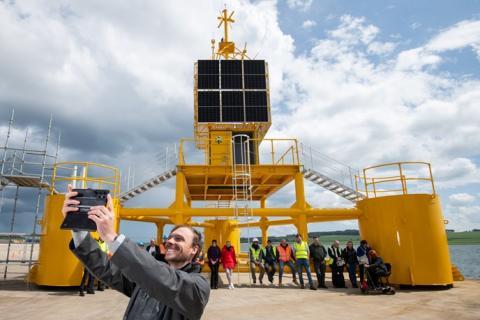
Standing 22 metres tall and weighing 33 tonnes, the buoy platforms under construction at the Port of Dundee are designed to carry communications equipment out to sea. By connecting wirelessly with one another, they could provide offshore coverage without relying solely on subsea fibre optic cables.
The project, supported through the Tay Cities Region Deal’s Tay5G programme, brings together offshore engineering, advanced connectivity and cybersecurity expertise. Alongside strengthening communications, the technology could help operators monitor conditions, inspect equipment using drones and reduce the need to send personnel into potentially hazardous offshore environments.
Bringing 5G connectivity offshore
JET Connectivity developed the technology to address the challenges of maintaining reliable communications far from land. Offshore wind farms and platforms need connectivity for activities ranging from day-to-day operations to transmitting live video and monitoring equipment.
At a demonstration in Dundee, the company’s chief executive, James Thomas, explained how compact 5G communications equipment had been developed before being integrated into the much larger floating platforms.
The early prototype was assembled in his garden. By the time of the June 2024 demonstration, the project had progressed to substantial buoy structures at Dundee harbour, with an ambition to deploy around 150 units to create a connected network across the North Sea.
Each buoy is designed to communicate with others over distances of approximately 10–15 kilometres. Linking multiple units would create a mesh network, allowing communications to pass between floating stations rather than depending on a single fixed connection.
This approach could extend wireless coverage across offshore sites and offer additional communications routes if part of the network becomes unavailable.
Abertay University also contributed expertise to the project, with cybersecurity specialists helping to assess and strengthen the technology’s protection against attack. This work recognised that reliable offshore communications must combine physical resilience with safeguards for the digital systems carrying operational information.
Drones demonstrate new possibilities
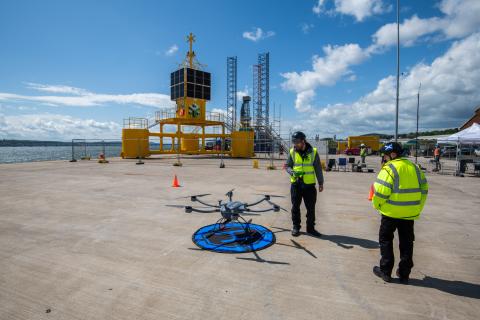
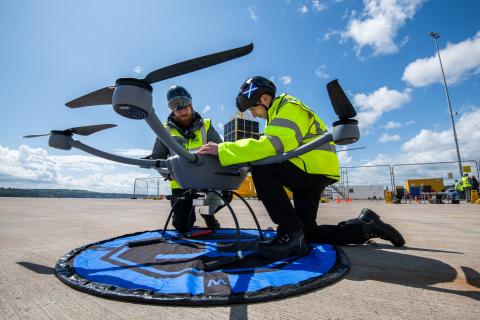
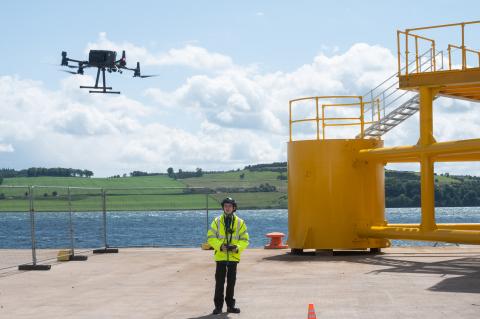
The Dundee demonstration also showed how an airborne 5G base station carried by a drone could connect with equipment on land and potentially link to the offshore buoys.
Combining airborne and floating communications systems could create more flexible coverage for operations at sea. It could also support drones carrying out inspections of wind turbines and offshore platforms, transmitting footage and information to teams working remotely.
For operators, this offers the prospect of examining equipment without sending people offshore for every initial inspection. Remote checks could help identify where further investigation is needed and inform decisions about maintenance visits.
The technology could therefore support safer working practices while making inspections easier to organise, particularly at sites where distance and weather conditions complicate access.
JET Connectivity sees these applications as part of a wider opportunity to improve the flow of information between offshore infrastructure, vessels and teams on land.
Strengthening communications resilience
Subsea fibre optic cables provide important connections for offshore energy infrastructure, but damage can interrupt services and repairs can be complex and time-consuming.
At the demonstration, James Thomas highlighted the risks associated with depending on vulnerable physical links, including the possibility of deliberate interference. He presented the wireless buoy network as a way to provide additional communications resilience.
A mesh network could offer alternative routes for data when a connection is disrupted, depending on its configuration and the availability of neighbouring stations. It would give operators another means of maintaining contact alongside their existing communications systems.
The project’s relevance extends beyond connectivity alone. As offshore wind becomes an increasingly important part of the UK’s energy supply, maintaining access to operational information is essential for managing infrastructure and responding to problems.
The buoy technology explores how wireless networks could contribute to that resilience while supporting the growing demand for offshore data.
Monitoring conditions and environmental impact
The floating platforms could also collect and transmit information about conditions at sea, including wind speed and wave height. Access to this data could help teams assess whether conditions are suitable before sending personnel offshore.
Live video and sensor readings could support a clearer picture of what is happening around a wind farm, helping operators plan activities and respond to changing circumstances.
JET Connectivity also identified opportunities for marine wildlife observation and wider environmental monitoring. Gathering information across offshore sites could help wind farm operators better understand their interaction with the surrounding marine environment.
By bringing together communications, remote inspection and environmental data, the project demonstrates how 5G could become a practical tool for offshore operations. Its development at the Port of Dundee also highlights the Tay Cities region’s role in testing technologies with potential applications across energy, maritime services and infrastructure security.